

Tyler is currently two weeks out from the Trans Balkan Race — a self-supported 1400 km off-road bike race with roughly 30,000 meters of climbing.
A few months ago, that seemed pretty unlikely.
Tyler’s patellar tendon was so irritated from his training that simply accumulating enough saddle time to prepare for the race was becoming a problem. Like a lot of endurance athletes, the issue wasn’t a single traumatic event. It was the gradual accumulation of load eventually exceeding what the tissue could tolerate.
The frustrating part about tendons is that resting them completely rarely solves the problem long term. Tendons generally thrive on load — just the right type, at the right dosage, and introduced progressively.
So instead of shutting things down entirely, we focused on building his tolerance back up. You can see a video about it HERE.
______________________________________________________________________________
Heavy Slow Resistance
A big part of Tyler’s program was heavy slow resistance training.
We worked at the heaviest tolerable load through the knee using controlled tempo, lower repetitions, and plenty of rest between sets. The goal wasn’t to “smoke” the legs. It was to expose the tendon to meaningful load in a way that encouraged adaptation without constantly flaring symptoms up.
This type of training tends to work well for tendinopathy because it gives the tissue a strong enough signal to remodel and become more robust over time.
Strategic Isometrics
We also used isometric holds throughout the process.
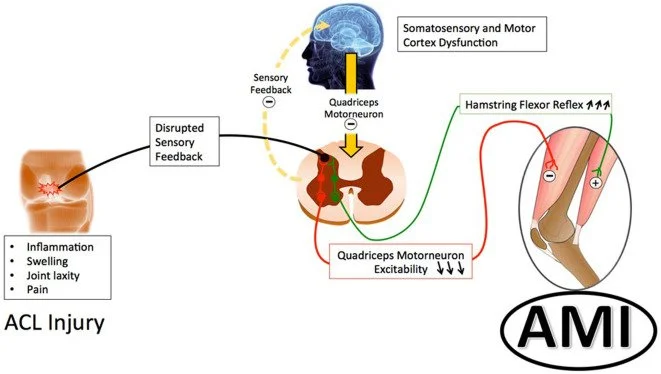
Depending on the day, these ranged from lower intensity holds to much heavier efforts. Isometrics can be a useful tool for calming symptoms down and reducing some of the pain inhibition that tends to happen around irritated tendons.
They’re not magic, but when used strategically they can help create a window where athletes can continue training more comfortably.
Looking Upstream
Another important piece was addressing what was happening above the knee.
We spent time cleaning up some asymmetries around Tyler’s hips and pelvis through supplementary strength work. Often the painful area is only part of the story. If the system around it isn’t sharing load well, the irritated tissue keeps picking up the tab.
For endurance athletes especially, small movement inefficiencies repeated thousands of times can add up quickly.
The Goal Was Never “Pain Free”
The goal wasn’t to completely eliminate every sensation in the knee before training again. It was to gradually increase Tyler’s ability to tolerate the demands of his sport while keeping symptoms manageable and trending in the right direction.
Over time, that approach allowed the tendon to become stronger, denser, and more resilient.
No injections. No major downtime off the bike. Just a thoughtful progression of loading strategies paired with consistent work.
Now he’s heading to the start line with a chassis that’s objectively stronger and better prepared than it was last season.
Good luck out there, Tyler. Go crush it.