
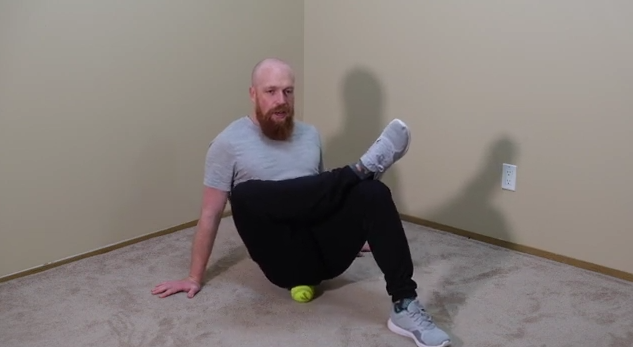
Self myo-fascial release is one of many tools that can help reduce pain and increase range of motion. For some reason people just tend to assume that it works by changing the fascia by breaking down myofascial adhesions. However the force required to remove myofascial adhesions is likely to be more like a steam roller then than that of any force produced by a foam roller or lacrosse ball.
If we were to break down, or elongate every time we felt a little sustained pressure, we would be pretty fragile. For example if every time we sat back into a hard park bench or lent against a wall it would result in our posterior chain lengthening, this isn’t the case.
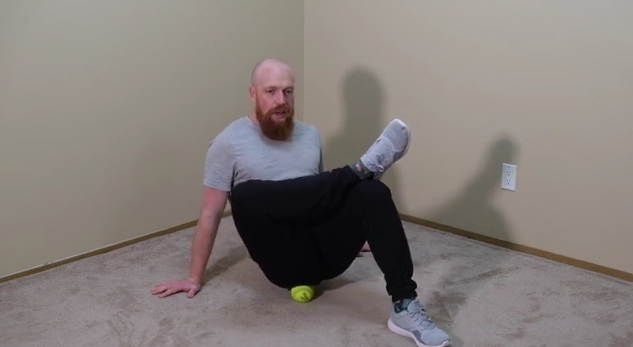
How does myofascial release work?
Truth is there are many theories as to how it works, however a large body of research suggests that it is a result of a global effect (neurological), that then results in reduced pain and increased range at the distal sites. So what does this actually mean? Well here is a great way of breaking it down in story form which I read by Todd Hargrove from physio-network in the case of foam rolling.
First you put a foam roller into your butt and create some significant nociceptive signalling. The brain receives it and says something like: “OK, the butt is telling me that there is some danger down there right now. But I happen to know that this is a therapeutic situation because my trainer said so. So, let’s send some drugs down the spinal cord to block all this talk about danger. And, we’ll make this feel like a “good” pain, not an injury.” The drugs reduce pain and thereby improve movement temporarily.
Todd Hargrove
So the science behind this is a result of a modulation of the nervous system. This happens through the suppression of the nociceptors and seems to be the most likely cause for change in pain and range of motion. Nociceptors are the pain receptors in the body that help alert us of potential damaging stimuli, these receptors are believed to be suppressed through DNIC (diffuse noxious inhibitory control) the drugs that get sent down the spinal cord. David Butler has a great video describing this process called “The Drug Cabinet of the Brain” that is worth a few minutes of your time. This process also alters hormones that affect pain perception through parasympathetic nervous system activity.
Pain relief and improved movement opens a window of opportunity to take advantage of. If you are feeling better only for an hour, this provides enough time to train movements that would not normally be accessible, learn new skills, develop new capacities, and reduce the perceived threat associated with certain movements. All of which could have longer lasting or permanent benefit. But of course if you just sit on the couch, the benefits will likely just be temporary.
In Summary
When working through myofascial release techniques include a series of movement patterns if you are looking towards making a longer lasting change. Consider your individual goal and integrate the movements that align to this.
